
Buying a used scooter or motorcycle in Belgium: the checklist and the rules
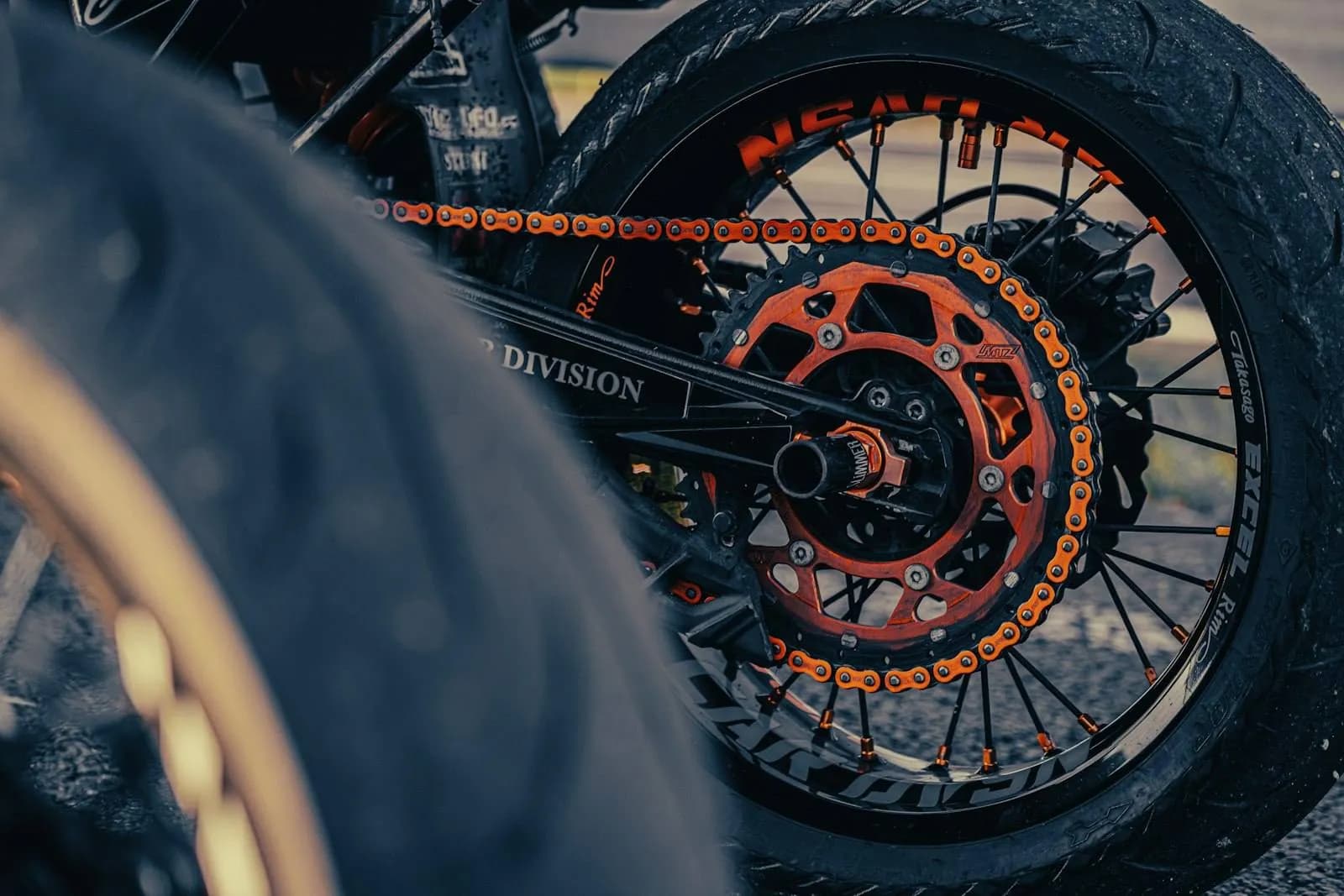
A used two-wheeler can be a great deal, or a source of trouble: missing papers, a forgotten inspection, a motorcycle that will soon be banned from Brussels. Here is our workshop's checklist and the current Belgian rules, whether you are buying a 50cc scooter, a 125 or a motorcycle.
The key points in 30 seconds
- 50cc scooters and 125cc: no inspection on resale, registration directly through your insurer.
- Motorcycles over 125cc: inspection required before registration in your name. In Flanders, this requirement ends on 1 January 2027.
- The number plate stays with the seller: you ride with your own plate.
- No Car-Pass for motorcycles: check the mileage with the service invoices.
- In Brussels, check the Euro standard (box V.9 of the registration certificate): a Euro 3 motorcycle will be banned there in 2028.
- From a dealer, you get at least one year of legal warranty; between private individuals, in principle none.
50cc scooter, 125 or motorcycle: what changes
- 50cc scooter (moped): no inspection, no annual road tax. Mopeds have carried plates since 2014 (S plates). In Brussels, a petrol 50cc must be Euro 5 from 2028 and will be banned in 2030.
- Scooter or motorcycle up to 125cc: no inspection on resale, no annual tax (up to 250cc). Registration directly through the insurer.
- Motorcycle over 125cc: resale inspection, annual tax above 250cc.
- Electric: inspection only above 11 kW and 45 km/h; no LEZ restriction.
Which licence for which vehicle? It is all in our guide to motorcycle and scooter licences in Belgium.
Before you go
- Work out the full budget: price, insurance, registration tax, plate (€30), gear. On a 125 and a motorcycle, gloves, jacket, trousers and boots are mandatory: see our article on mandatory gear.
- Ask for the Euro standard if you ride in Brussels. Our article on the LEZ and two-wheelers gives the timetable.
- Ask for the history: year, mileage, service invoices, number of owners, any fall.
- Be wary of a price well below the market: it is the first sign of a scam.
On the spot: our workshop's checklist
For every two-wheeler
- The frame number stamped on the frame must match the registration certificate.
- The tyres: tread depth, cracks and age. The DOT code on the sidewall gives the week and year of manufacture (e.g. 2321 = week 23 of 2021). An old tyre hardens, even with little wear.
- The brakes: discs without deep scoring, pads, clean brake fluid, levers that do not come back to the handlebar.
- Leaks: under the engine, around the fork and the hoses.
- Lights and indicators, horn, a dashboard with no warning light on.
- A cold start: ask that the engine was not run before you arrive. Hard starting or blue smoke are warning signs.
Scooter: the transmission
- The belt and rollers wear with mileage: ask when they were replaced, with invoices.
- Pulling away, the scooter should move off without jerking or slipping noises.
- The battery: a sluggish starter often means a battery due for replacement.
- The bodywork panels: cracks, missing screws or parts in a different colour reveal a fall.
Motorcycle: chain, fork and signs of a fall
- Chain, sprocket and front sprocket: a chain you can pull off the rear sprocket or pointed teeth mean a chain kit to replace.
- The fork: no oil on the tubes, no noise when pushing on the handlebar with the front brake on.
- The steering: the handlebar must turn freely, without a notchy point.
- Signs of a fall: bent levers, bar ends, footpegs, scratched mirrors and tank, a scraped belly pan.
The test ride
- Ride for at least ten minutes, with your own gear and insurance that covers you.
- At low speed the bike should run straight with a light grip on the handlebar, with no vibration or odd noise.
- Gears (on a motorcycle) should shift cleanly; the clutch must not slip when you accelerate.
The papers you should receive
- The seller's registration certificate (both parts).
- The European certificate of conformity.
- For a motorcycle over 125cc: the pink registration application form, issued by the inspection station. It is valid for two months.
- The service invoices: with no Car-Pass for motorcycles, they are what makes the mileage credible.
- A sales contract or invoice, dated and signed, with the frame number, mileage and price.
The number plate is not sold with the vehicle: it stays with the seller, who cancels it or fits it to their new two-wheeler within four months.
The resale inspection
Since 1 January 2023, a motorcycle over 125cc (or an electric one over 11 kW and over 45 km/h) must pass a technical inspection before it is registered in a new owner's name. There is no periodic inspection. Seller and buyer agree who takes it; in practice it is often the seller.
- In Brussels, motorcycles go to the Schaerbeek centre (appointment on autocontrole.be): €57.50 in 2026. With a red certificate, the motorcycle cannot be sold as it is.
- In Wallonia, at AIBV and Autosécurité centres, around €50.
- In Flanders, the resale inspection for motorcycles ends on 1 January 2027, except for imported vehicles. If you buy in another Region than yours after that date, check the rules before buying.
The inspection checks safety, not wear: a green certificate says nothing about the age of the tyres, the chain or the clutch. The checklist above remains essential.
Registering your two-wheeler
- 50cc scooters, 125cc and under: since 1 August 2025, your insurer registers the vehicle directly online, without going through bpost (except for imported or accident-damaged vehicles, certificates from before 2002 or personalised plates).
- Motorcycles over 125cc: give your insurer the pink form from the inspection station and the old registration certificate.
- Plate and certificate arrive by post; the plate costs €30.
- Third-party liability insurance is compulsory before you ride, including the ride home.
Taxes to budget for
- The registration tax is paid by the new owner of a motorcycle. It depends on power and age: for a motorcycle of up to 70 kW (95 hp), roughly €50 to €80 depending on the Region; more for a recent large bike.
- The annual road tax only applies to motorcycles over 250cc: €76.03 in Brussels and Wallonia, €75.90 in Flanders (2026-2027).
- A 50cc scooter pays no annual road tax.
Private seller or dealer?
With a dealer, the legal guarantee of conformity applies: two years, which the seller may reduce to at least one year for a used vehicle, provided this is stated clearly. Cash payments there are limited to €3,000. Between private individuals there is in principle no guarantee: only hidden defects can be claimed, which is slow and uncertain. The lower price has to make up for that risk.
The most common scams
- A deposit requested before the viewing, « to reserve it ».
- A seller abroad offering delivery by a carrier.
- A payment link or an « escrow » website sent by the seller.
- Missing papers or a frame number that does not match. If you suspect theft, the DIV can check the frame number.
A simple rule: pay only after you have seen the vehicle, the papers and done the test ride.
Our used vehicles
Every two-wheeler in our used stock is serviced by our workshop before sale, and sold with an invoice and the legal guarantee. Bought elsewhere? Our workshop can carry out the first service on your new two-wheeler. A question before you buy? Contact us.
Frequently asked questions
Is an inspection required for a 125 scooter?
No. The resale inspection only applies to motorcycles over 125cc and to electric ones over 11 kW and over 45 km/h.
Do you need a Car-Pass to sell a motorcycle?
No. The Car-Pass only covers cars and vans. For a motorcycle, ask for the service invoices.
How many kilometres is too many for a used scooter?
There is no magic number: a well-maintained 125 with invoices is better than another with fewer kilometres and no history. Check above all what has been replaced.
Who keeps the number plate?
The seller. You register the vehicle with your own plate, through your insurer.
Can I buy a Euro 3 motorcycle to ride in Brussels?
It can ride there until 31 December 2027. From 2028, Euro 4 is the minimum, then Euro 5 from 2030.
Rules checked on 15 October 2026 on the official websites: mobilit.belgium.be, be.brussels, vlaanderen.be, car-pass.be and economie.fgov.be. Photo: Jan Kopřiva, Unsplash.