
Motorcycle and scooter gear in Belgium: what is mandatory and what we recommend
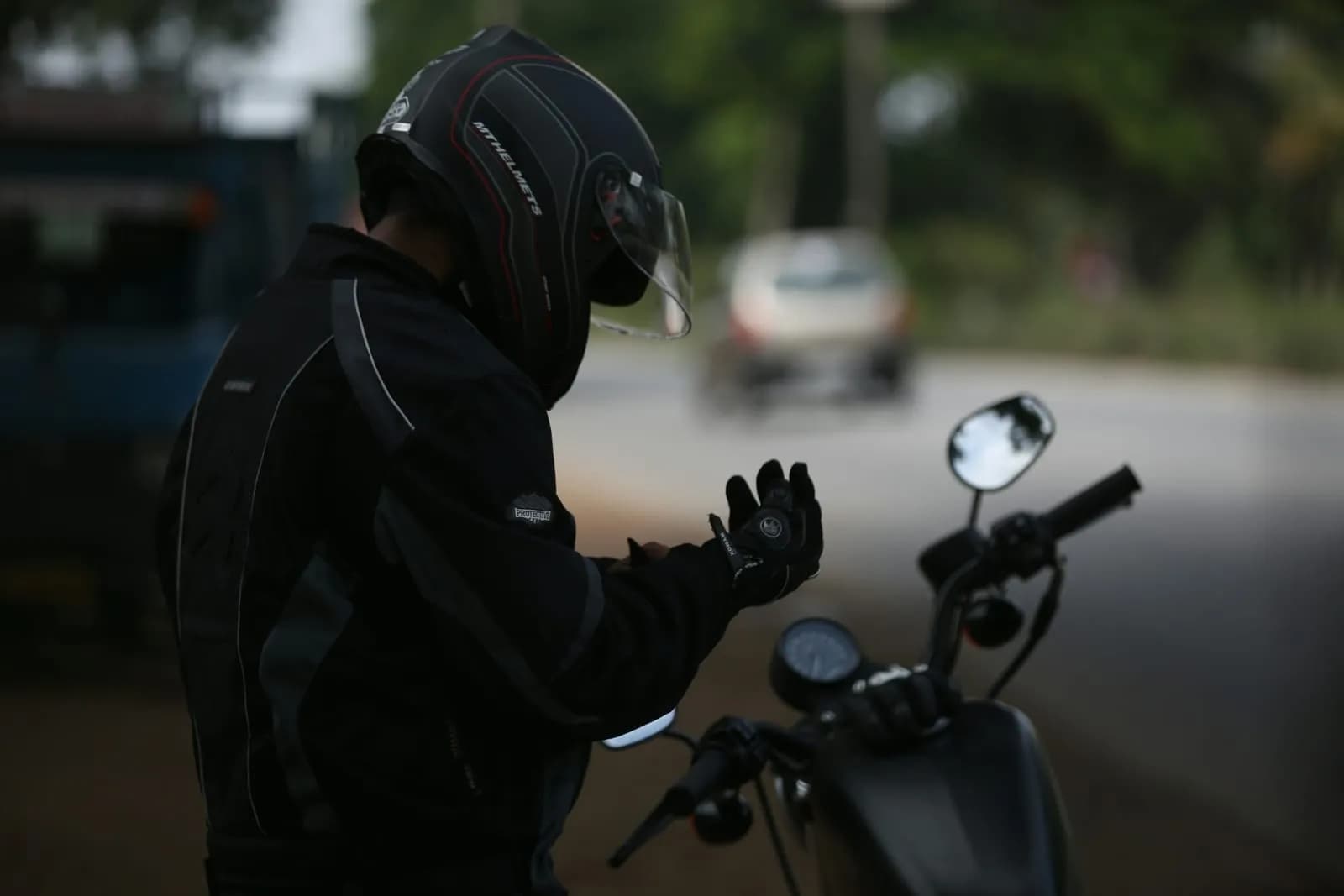
On a scooter or a motorcycle, Belgian law does not ask the same of everyone. It all depends on your vehicle: a 50cc scooter does not need the same gear as a 125. Here is what is mandatory, then what we advise you to wear on top.
The essentials in 30 seconds
- 50cc or 45 km/h electric scooter (moped): helmet required.
- 125cc scooter and above, motorcycle: helmet, gloves, long-sleeved jacket, long trousers and boots covering the ankles. For the rider and the passenger.
- Speed pedelec: moped helmet, or a bicycle helmet that protects the temples and the back of the head.
- Bicycle: no mandatory helmet, but two brakes, a bell, reflectors and lights at night.
- Children: never on a scooter or motorcycle under the age of 3.
50cc scooter: a helmet is all the law asks
On a moped (50cc scooter, or electric scooter limited to 45 km/h), the rider and the passenger must wear an approved helmet. The law asks for nothing else.
An approved helmet carries an ECE 22.05 or ECE 22.06 label, sewn onto the chin strap. New helmets are now approved to 22.06, the most recent standard.
The law stops at the helmet, but a fall at 45 km/h on tarmac does real damage. Gloves and a jacket are still strongly advised, especially in town. See our 50cc scooters and our electric scooters in their 45 km/h versions.
125cc scooter and motorcycle: full gear is mandatory
As soon as you ride a motorcycle, which includes a 125cc scooter, a 300, any motorbike or an electric scooter faster than 45 km/h, article 36 of the Highway Code requires the rider and the passenger to wear:
- an approved helmet;
- gloves;
- a long-sleeved jacket;
- long trousers or a one-piece suit;
- boots or ankle boots that protect the ankles.
The rule applies all year round, in summer too and for a five-minute trip. Shorts, low trainers or bare hands on a 125: that means a fine if you are stopped.
Good to know: the law sets no standard for this clothing. A denim jacket is therefore legal, but it gives almost no protection in a fall. Hence our advice below.
This covers our 125cc scooters, our 300cc-plus scooters, the Piaggio MP3 and all our motorcycles. To find out which licence you need, read our guide to motorcycle and scooter licences in Belgium.
Speed pedelec: a helmet, but which one?
A speed pedelec (an e-bike with assistance up to 45 km/h) is a moped in the eyes of the law, so a helmet is mandatory. You can choose between:
- an approved moped helmet;
- a bicycle helmet that also protects the temples and the back of the head.
Our advice: choose a helmet certified NTA 8776. This Dutch standard was created for speed pedelecs and meets that protection requirement.
Bicycles and e-bikes: the bike's own equipment
On a bicycle, including a standard e-bike (assistance up to 25 km/h), a helmet is not mandatory in Belgium. It is the bike that must be equipped:
- two brakes, one front and one rear;
- a bell audible at 20 metres;
- a white reflector at the front and a red one at the rear;
- yellow or orange reflectors on the pedals;
- reflective strips on the tyres or reflectors in the spokes;
- at night or in poor visibility, a white or yellow light at the front and a red light at the rear.
Some road bikes and mountain bikes are exempt from reflectors in daylight. Our city and trekking bikes and our e-bikes are delivered fully compliant, and our workshop checks brakes and lights at every service.
Carrying a child
- Under 3: not allowed on a scooter or motorcycle.
- From 3 to 8: only on a two-wheeler of 125cc or less, in a suitable child seat.
- From 8: on any two-wheeler, with a helmet, and full gear on a 125 or a motorcycle.
The child's helmet must fit: an adult helmet that is too big does not protect them.
What we recommend on top
The legal requirement is a minimum. After more than 60 years serving Brussels riders, here is what we recommend:
The helmet
- A full-face or modular helmet protects the chin, which an open-face helmet does not.
- Try it on in a shop: it should feel snug without hurting and not move when you shake your head.
- Replace it after a fall, even with no visible damage, and generally every five to seven years.
- An anti-fog visor (Pinlock type) makes all the difference in winter.
Clothing
- CE-certified gloves (EN 13594), with palm reinforcement.
- A certified motorcycle jacket and trousers (EN 17092), with protectors at the elbows, shoulders and knees.
- A back protector (EN 1621-2), or an airbag vest to go further.
- Certified motorcycle boots (EN 13634) rather than high-top street shoes.
Being seen
- A light-coloured jacket or reflective strips, especially in winter when it is dark by 5 pm.
- Your dipped headlight: it must stay on at all times, day and night (article 30bis of the Highway Code).
For everyday riding in Brussels
- A rain suit that fits under the seat.
- Earplugs for long trips: wind noise is tiring.
- An approved lock, attached to a fixed point.
Your two-wheeler, ready to ride
Looking for a scooter or motorcycle? Visit us in Woluwe-Saint-Lambert: we will help you choose according to your licence and your journeys. Our workshop then checks tyres, brakes and lights at every service. Any questions? Contact us.
Rules checked on 1 October 2026 in the Belgian Highway Code (articles 30bis, 35, 36 and 82). The current Highway Code will be replaced on 1 June 2027 by a federal code and regional codes: we will update this article then. Official source (in French): codedelaroute.be. Photo: Shajan Jacob, Unsplash.